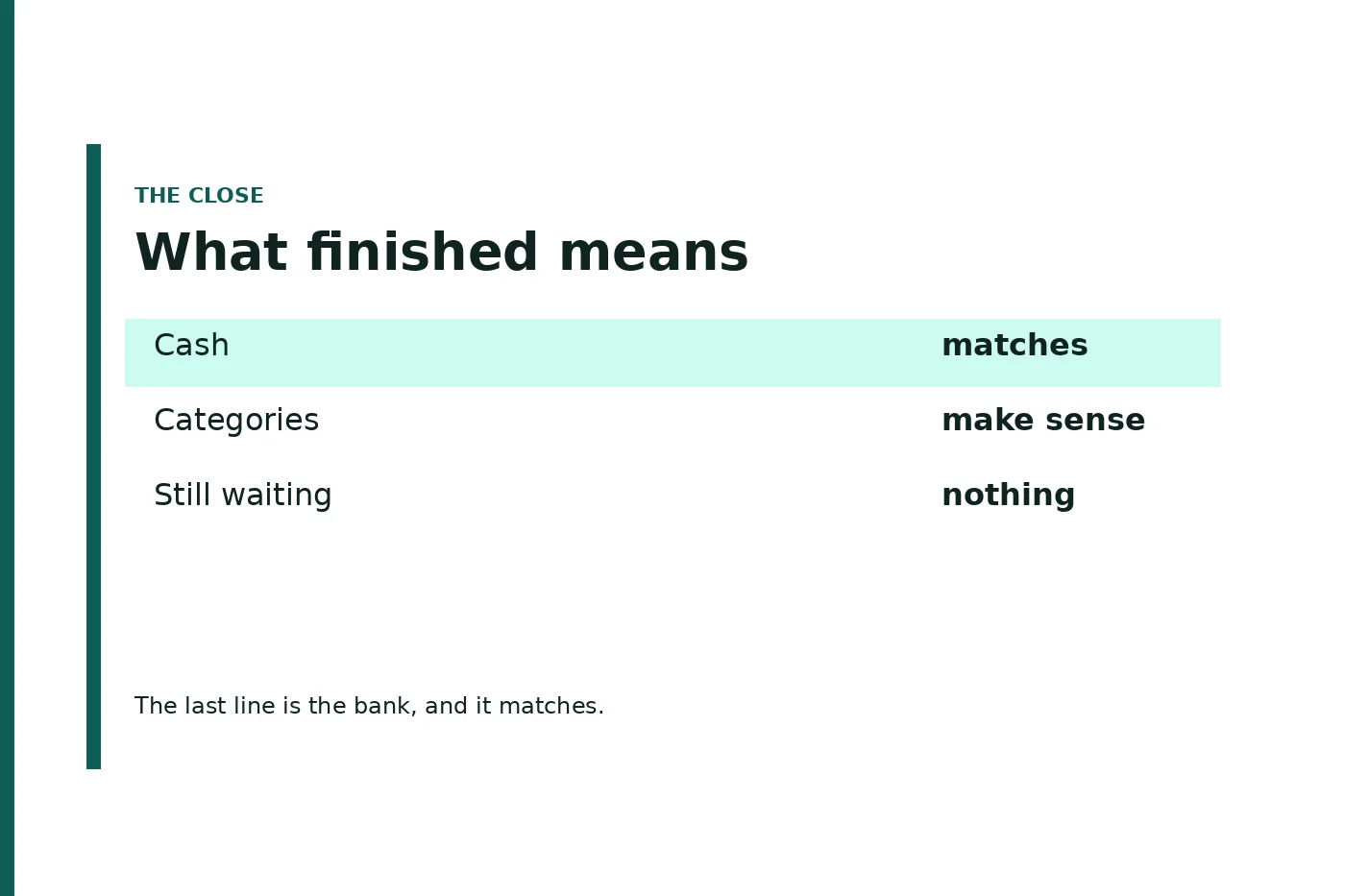
What finished means here
The bank matches. The cards match. The loan balance matches if there is a loan. Draws are in equity. Categories are the ones we agreed, used the same way as last month. Nothing is sitting in a question pile that we already know how to ask.
That is the whole definition. It does not require a bound report, a board meeting, or a new logo. It requires the transactions to have names, and the names to be true.
A wholesale show can fill a week for a small maker. Anyone who sells into a show week knows the receipts pile up. We still want the month to close after the show, on the date you already picked, not when the week finally feels calm.
A date you can keep
We like a date early enough that the next estimate, or the next conversation with a lender, can use the month. The tenth is a friendly target for a simple shop. A shop with inventory or a job schedule may need a few more days. The point is that the date repeats.
You do not have to sit in the close. We do the matching. You answer the few things only you know, like whether a transfer was a draw or a payment to a contractor. Then we tell you the month in a short read, out loud.
If you disappear for the questions, the month stays open. That is not a punishment. It is the definition. A month with an unanswered transfer is not finished, and we will not label it finished to make a dashboard look green.
Why a one-person shop benefits
Because April is built out of these months. A year of closed months is a return that you already understood, one piece at a time. A year of a feed is a return that arrives as news.
Because a lender, a buyer, or your own future self will ask what the shop made. A closed month answers in a sentence. An open year answers with a shrug.
Start with one month, even if the ones before it are messy.
Separate the draws in that month first.
Momentum beats a plan to clean five years before anyone is allowed to close June.
Pick a close date
A note about a closed month is a small habit is enough for us to start from your file.