Sole Member LLC One return you sign
You still sign one return, even after the company exists. We keep the books, set payday up only when there is someone to pay, and prepare that return with you. The person who does this with us is Steven Palmieri. Tax CFO is the role, the Entrepreneur's CFO is the same role, and the months you still have left are the ones we open.
The practice is based in Dallas. You can sit anywhere. We still close on the same day, on a video call, with the books open where we can both see them.
Your company, briefly

When one owner should think like a company.
An accountant puts the company on your return. The Tax CFO asks when a company of one should stop being taxed like one: at what profit the election pays, what you should be paid when it does, and how health insurance and retirement fit before December. The signature is yours. The decisions are ours together.
Draws are not costs
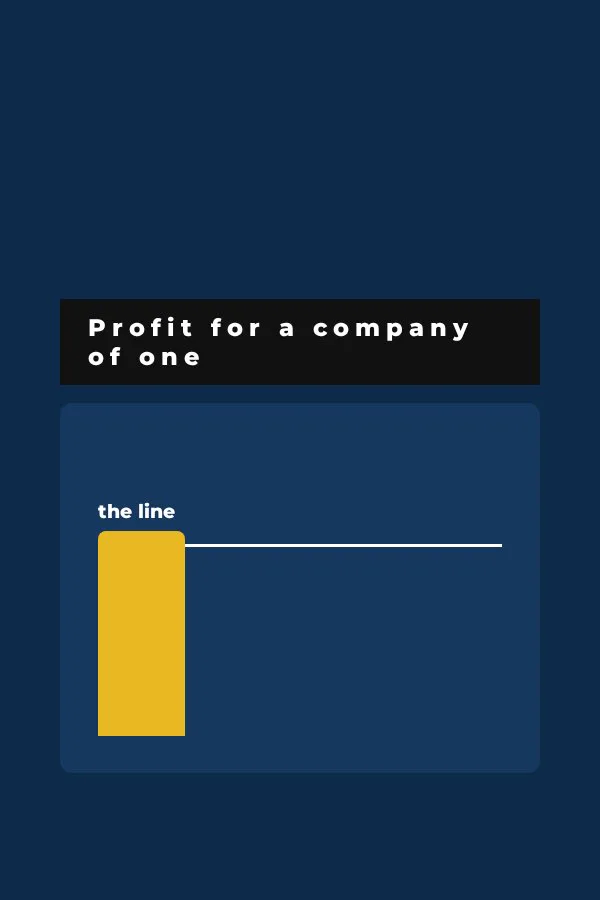
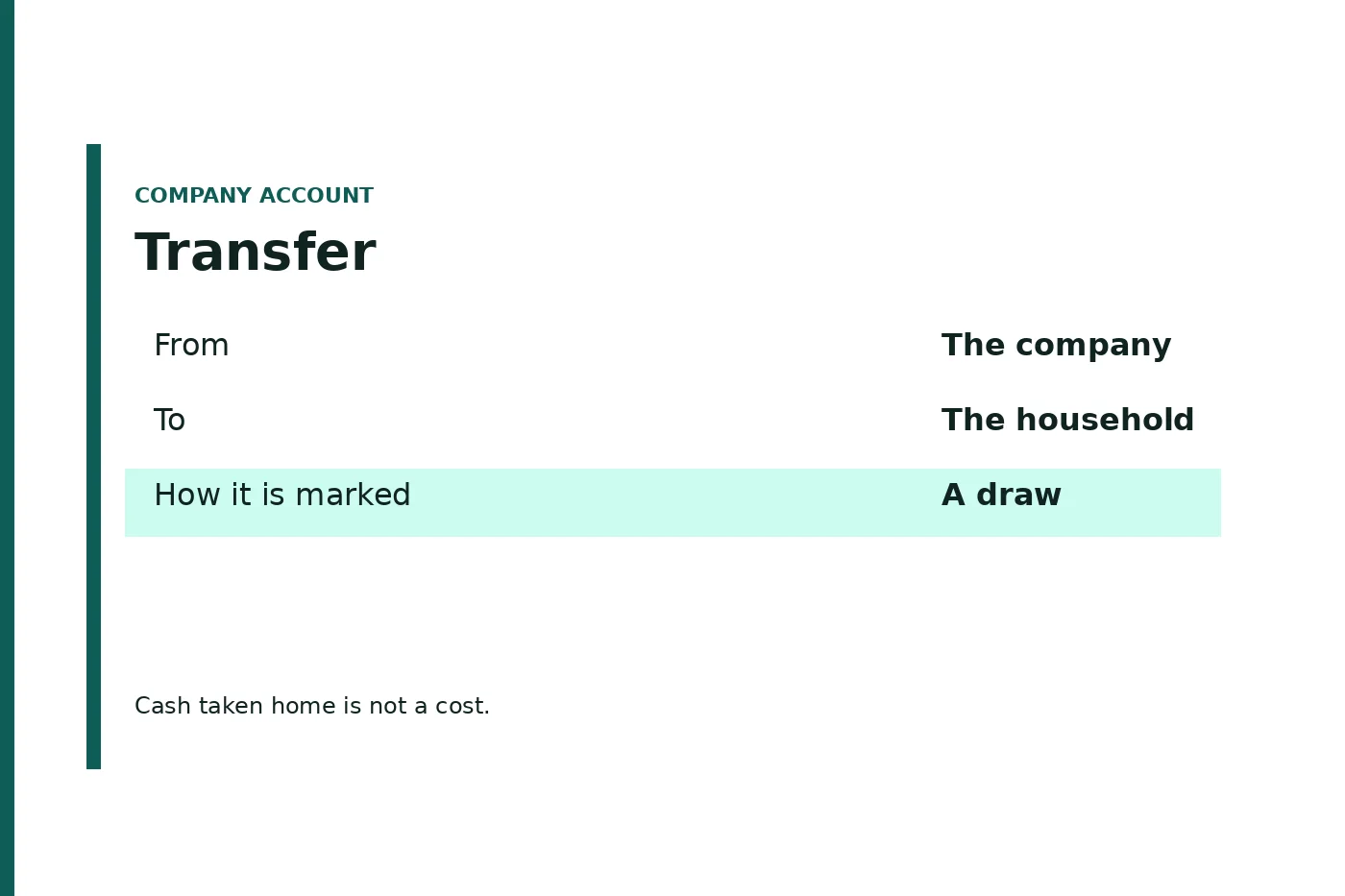
Cash you take home is a draw. A meal with a supplier can be a cost. The books have to say which, in the month it happened.
Click to sort a draw ›Tap to sort a draw ›
The tax is personal
Profit from the company is taxed on the return you sign. There is no second federal income tax bill waiting for the company.
Click to see that tax ›Tap to see that tax ›Estimates follow you
The company does not pay estimates. You do, on four dates. We rebuild each one from closed months.
Click to map the dates ›Tap to map the dates ›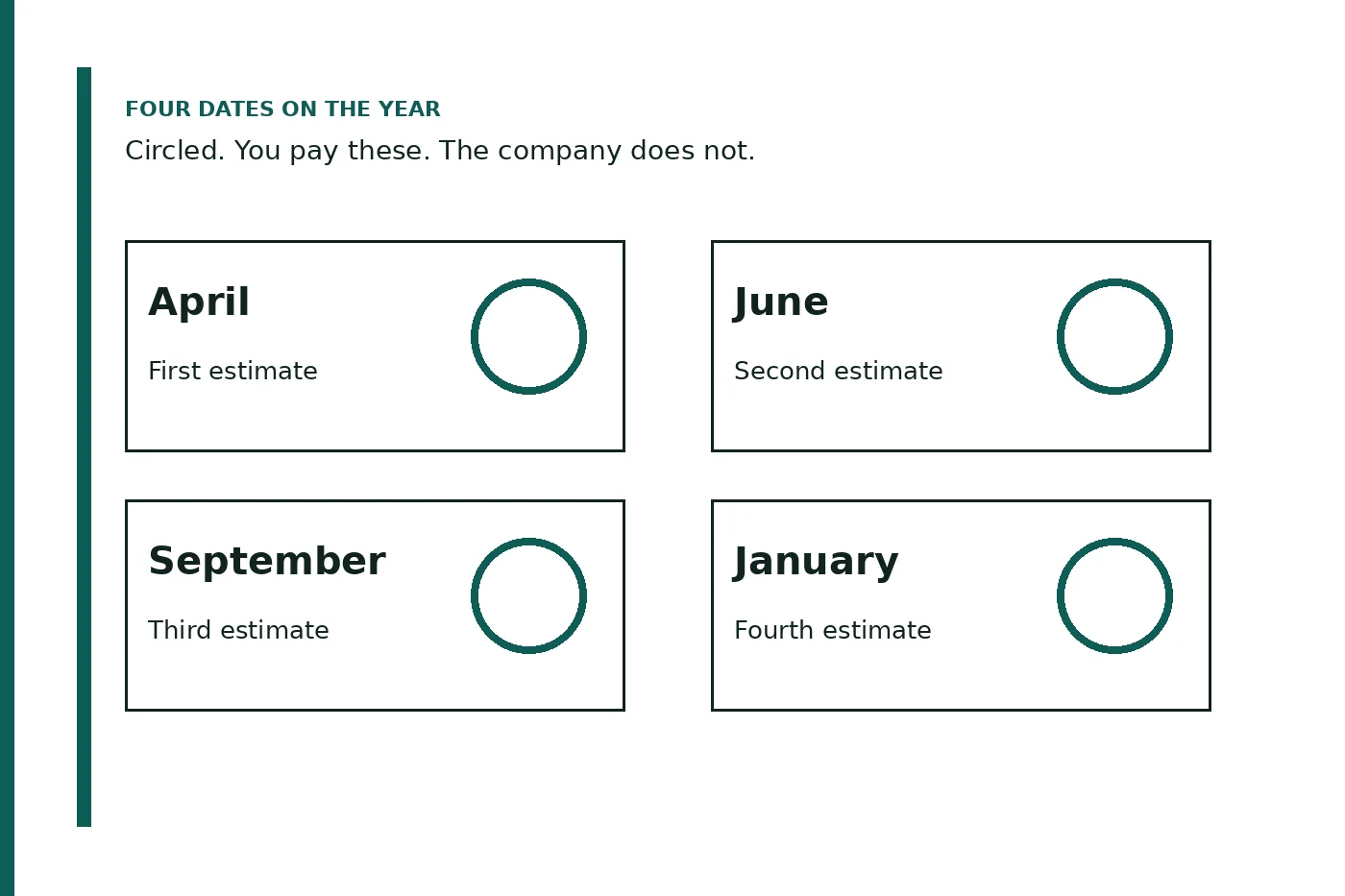
October can still change the shape
A louder month of sales changes the last estimate and what you take out. October is the month left for that choice.
Click to plan October ›Tap to plan October ›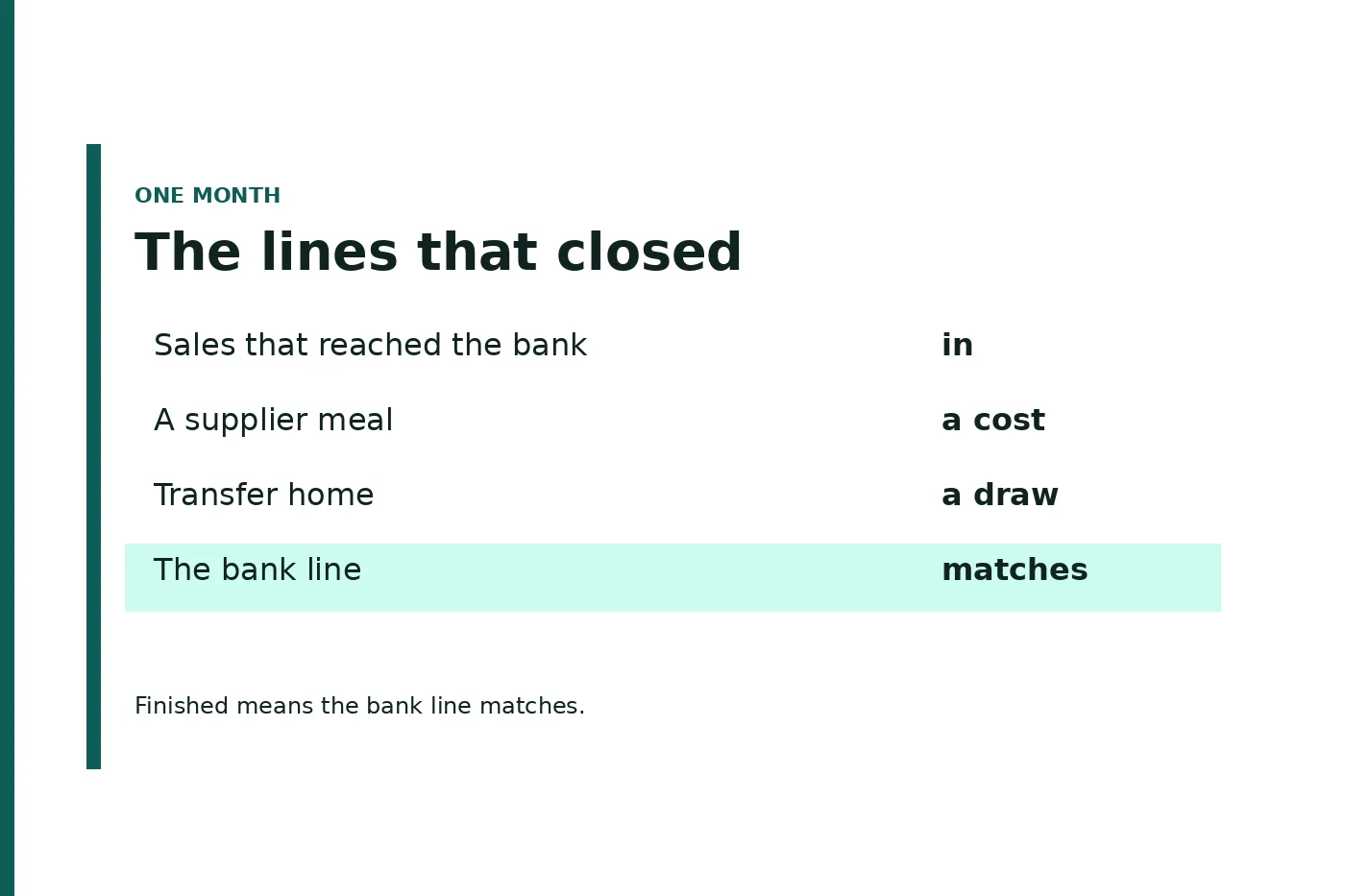
A month can still close
You can call the month finished when the bank line matches the books, and not a day before.
Click to close a month ›Tap to close a month ›
Questions we already hear
You can ask about a wage, a spouse, or whether a second taxpayer is already in the company.
Click to read the questions ›Tap to read the questions ›Six dates that still have your name
Open a month. The filing under it still carries your name.
1January
January often still holds the last estimate for the year that just ended. We build it from the months we closed, rather than from an old bill divided into four.
The payment comes from you, not from the company. We bring a figure that already has finished months under it.
2April
April is the return with your signature on it. When the company is disregarded, the shop's profit is already inside that same return.
You sign. We prepare the return those finished months can support.
3May
In May we read the first closed months and ask whether the June estimate should move. That look has its own week, apart from the return that was due in April.
June's payment is yours. The number we put under it comes only from months whose close is already done.
4June
June brings the second estimate of the current year. Two or three months should already be closed by then, so the payment is not a guess copied from memory.
You pay. We tell you what changed since April.
5September
September is the third estimate. A louder month of sales, or a weekend that ran long, does not move the day we close the books.
You pay that estimate. We close September on the same rhythm as August.
6October
October is when we look at the year you still have and decide what next January should be. It is a planning month, not a made-up election deadline.
We read it with you. Nothing is filed just because the month has a nice ring to it.
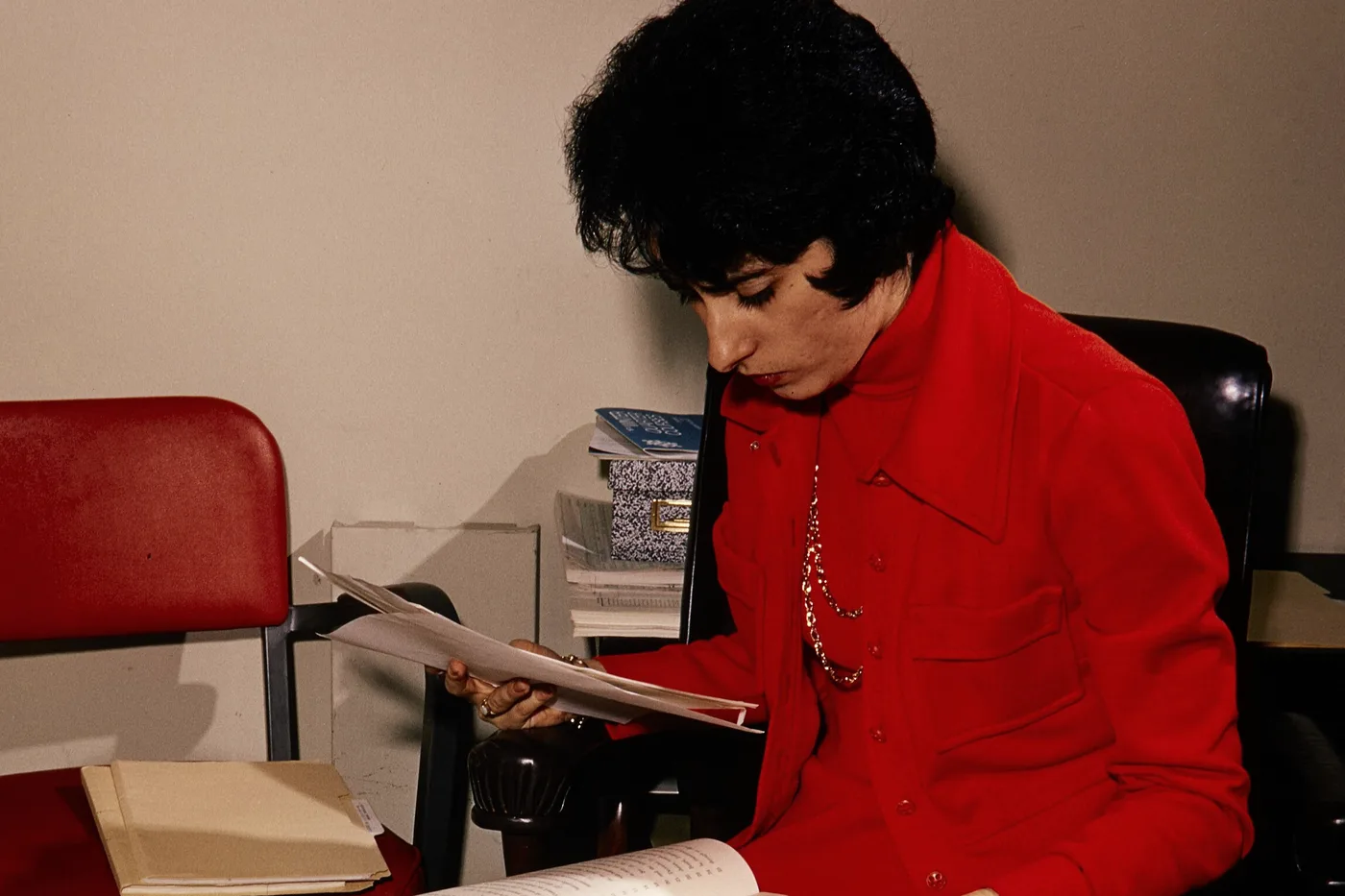
Steven Palmieri, Tax CFO.
You sign the return. We bring that month already tied out.
Click to meet the practice ›Tap to meet the practice ›Tell us the company
One sentence is enough.
What disregarded actually means
One owner, two calendars
A limited liability company with a single owner is often disregarded for federal income tax. That word sounds like the company does not exist. It does. The bank account can be in the company name, the lease can be in the company name, and a state can still expect its own report. What changes is where the profit is taxed. It is taxed to you. The return you sign is built from closed months, and a month that is still open stays out of that draft.
Sales, costs, and cash that moved home stay in three piles. If those piles blur, April tells a story the bank statement will not back, and a lender conversation gets worse for no good reason.
The opening month is the plain one. Accounts get connected, draws get a name, and a close date gets picked that you can actually keep. By the tenth the aim is last month finished, not a ritual a one-person shop never asked for.
Payday is set up, not run by us. If there are no employees and no election that puts you on a wage, there may be nothing to set up yet. When that changes, a provider you control does the cycle. We map the wages back to the books so the return and the bank still agree.
What the first months feel like
The months already in the feed
Whatever has been sitting in the feed comes first. Uncategorized deposits, transfers labeled as supplies, a personal card mixed into the shop. We sort it until a month can be called finished. Finished means the cash matches, the categories would make sense to you as the person signing, and nothing is waiting on a question we already know how to ask.
Then there is the close you can point at. Same categories as last month. Draws in their own place. A short read of what changed, out loud, once a month. You should be able to say what the shop made without opening twelve tabs.
The year has not locked the choices that are still open. Estimates that belong to this year. Premiums posted a single time, in the right account. A spouse described the way the company agreement describes them. An election discussed before a form leaves, while the year can still change.
Price follows how many accounts exist, how far behind the feed is, and whether an election is already real. A number borrowed from another owner would be a fiction, and this entrance does not invent one.
Where to go next on this entrance
The pages, in the order an owner usually needs them
Start with draws and costs if money leaves for the household and you are not sure what to call it.
Read the personal tax if you have been waiting on a separate bill that is not coming.
The estimate dates are the individual calendar, not a company calendar.
The deduction page refuses to invent a cutoff.
Health premiums and
are the two facts that most often change the return without anyone meaning them to.
Wages enter after an election is actually in force.
Who signs is shorter than people expect.
October is for the shape of next year.
A closed month is the habit underneath all of it.
If you want the shape with no name attached,
the hypothetical is that page.